Kidney Stones: Causes, Symptoms & Best Treatment Options
Kidney Stones: Causes, Symptoms & Best Treatment Options
Everything you need to know about kidney stones — from early warning signs to the latest minimally invasive treatments — by the expert urologists at Narayana Hospitals.
Kidney stones affect nearly 1 in 10 people at some point in their lifetime — and in India, the risk is even higher due to the hot climate, dietary habits, and dehydration. The good news? With the right knowledge and expert care, kidney stones are very treatable and, in many cases, preventable.
What Are Kidney Stones?
Kidney stones — medically known as renal calculi or nephrolithiasis — are hard, solid deposits made up of minerals and salts that crystallise inside the kidneys. They range in size from a tiny grain of sand to, rarely, as large as a golf ball.
Stones can form in one or both kidneys and may travel down through the ureter (the tube connecting kidney to bladder), the bladder, and finally the urethra. When a stone moves, it can cause intense, cramping pain known as renal colic.

Fig 1: Cross-section of the kidney showing calculi (stones) in different locations within the renal pelvis and calyx.
Types of Kidney Stones
| Stone Type | Composition | Prevalence | Key Risk Factor |
|---|---|---|---|
| Calcium Oxalate | Calcium + Oxalate | ~75–80% | High oxalate foods, low fluid intake |
| Calcium Phosphate | Calcium + Phosphate | ~5–10% | Alkaline urine, hyperparathyroidism |
| Uric Acid | Uric acid crystals | ~10% | High protein diet, gout, dehydration |
| Struvite | Magnesium Ammonium Phosphate | ~5–10% | Urinary tract infections |
| Cystine | Cystine amino acid | <1% | Hereditary cystinuria |
What Causes Kidney Stones?
Kidney stones form when your urine contains more crystal-forming substances — such as calcium, oxalate, and uric acid — than the fluid in your urine can dilute. At the same time, your urine may lack substances that prevent crystals from sticking together.
Common Causes & Risk Factors
- Dehydration — The #1 cause. Concentrated urine promotes crystal formation.
- High-sodium diet — Excess salt increases calcium levels in urine.
- High animal protein intake — Raises uric acid and calcium excretion.
- High-oxalate foods — Spinach, nuts, chocolate, beets are common culprits.
- Obesity — Alters urine chemistry and increases stone risk.
- Family or personal history — Genetic predisposition significantly raises risk.
- Certain medical conditions — Hyperparathyroidism, Crohn's disease, renal tubular acidosis.
- Medications — Diuretics, calcium-based antacids, some HIV medications.
- Urinary tract infections (UTI) — Can lead to struvite stones.
- Hot climate — Higher sweating = more concentrated urine (especially relevant in southern India).
Symptoms of Kidney Stones
Small kidney stones may cause no symptoms and pass unnoticed. However, when a stone grows larger or begins to travel through the urinary tract, it can produce severe symptoms.
Classic Warning Signs
- 🔴 Severe, sharp pain in the back, side, or below the ribs (renal colic)
- 🔴 Pain radiating to the lower abdomen and groin
- 🔴 Waves of pain that fluctuate in intensity
- 🟡 Pink, red, or brown urine (hematuria — blood in urine)
- 🟡 Cloudy or foul-smelling urine
- 🟡 Nausea and vomiting
- 🟡 Persistent urge to urinate more frequently than usual
- 🟡 Burning sensation while urinating
- 🟢 Fever and chills (if an infection is present — seek immediate care)


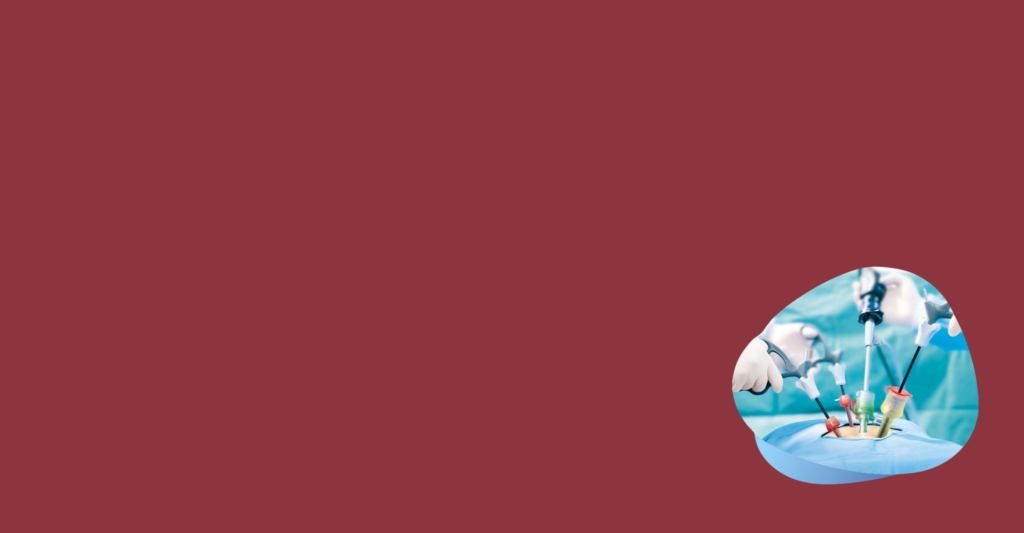
Fig 2 & 3: Minimally invasive stone removal procedure (left); Urologist explaining kidney anatomy using a cross-section model (right).
How Are Kidney Stones Diagnosed?
Accurate diagnosis is crucial to plan the right treatment. At Narayana Hospitals, our urologists use a combination of imaging and laboratory tests to assess the size, type, number, and exact location of kidney stones.
Diagnostic Tests Used
Imaging Tests
- CT Scan (Non-contrast CT KUB) — Gold standard; detects nearly all stone types and sizes with precision
- Ultrasound — Radiation-free; ideal for initial screening and monitoring
- X-ray (KUB) — Useful for calcium stones; may miss small or radiolucent stones
- Intravenous Urogram (IVU) — Assesses urinary tract function alongside stone location
Laboratory Tests
- Urine analysis — Checks for blood, infection, crystals, and pH
- 24-hour urine collection — Measures mineral concentrations to identify stone-forming tendencies
- Blood tests — Evaluates kidney function (creatinine, BUN), calcium, uric acid levels
- Stone analysis — If a stone is passed or retrieved, lab analysis identifies its type
Best Treatment Options for Kidney Stones
The choice of treatment depends on the stone's size, type, location, and whether it is causing complications like obstruction or infection. Narayana Hospitals offers the full spectrum of care — from conservative management to advanced minimally invasive surgery.
1. Conservative Management (Watchful Waiting)
Suitable for stones smaller than 5 mm that are not causing serious blockage or infection.
- Drink 2.5–3 litres of water per day to help flush out the stone
- Pain management with NSAIDs or prescribed analgesics
- Medical Expulsive Therapy (MET): Alpha-blockers (e.g., tamsulosin) relax the ureter muscles and help stones pass faster
- Dietary modifications to reduce stone-forming risk
2. Extracorporeal Shock Wave Lithotripsy (ESWL)
A non-invasive procedure that uses focused shock waves from outside the body to break kidney stones into smaller fragments that can be passed in urine.
- Best for: Stones 5–20 mm in the kidney or upper ureter
- No incision required; performed under mild sedation or anaesthesia
- Multiple sessions may be needed for harder stones
- Recovery: 1–2 days
3. Ureteroscopy (URS) with Laser Lithotripsy
A thin, flexible scope (ureteroscope) is passed through the urethra and bladder into the ureter or kidney to locate and break the stone using a Holmium laser. Fragments are removed or allowed to pass naturally.
- Best for: Stones in the ureter; stones <2 cm in the kidney
- Minimally invasive — no external incisions
- High success rate (95%+)
- A temporary ureteral stent may be placed for a few days
4. Percutaneous Nephrolithotomy (PCNL)
A small incision is made in the back to create a direct channel into the kidney. A nephroscope is used to break and remove large or complex stones.
- Best for: Stones >2 cm, staghorn calculi, or stones not responding to ESWL
- Most effective for large-burden stones — single-session clearance
- Mini-PCNL and Ultra-mini PCNL now available for faster recovery
- Hospital stay: 2–4 days
5. Retrograde Intrarenal Surgery (RIRS)
An advanced endoscopic technique where a flexible ureteroscope is navigated into the kidney through the natural urinary passage and a laser breaks the stone into dust.
- Completely scar-free — no cuts at all
- Ideal for patients with bleeding disorders, obesity, or single kidneys
- Rapid recovery with minimal hospitalisation
6. Open / Laparoscopic Surgery
Reserved for rare, complex cases where other methods have failed or are not feasible. Laparoscopic (keyhole) surgery has largely replaced traditional open surgery at centres like Narayana Hospitals.
| Treatment | Invasiveness | Best For | Recovery | Success Rate |
|---|---|---|---|---|
| Conservative / MET | None | <5 mm stones | Days–weeks | Variable |
| ESWL | Non-invasive | 5–20 mm | 1–2 days | 70–90% |
| URS + Laser | Minimally invasive | Ureter / <2 cm kidney | 1–3 days | 90–95% |
| PCNL | Minimally invasive | >2 cm / complex | 3–5 days | 85–95% |
| RIRS | Endoscopic (no cut) | Any accessible stone | 1–2 days | 90–95% |
| Open/Laparoscopic | Surgical | Complex / failed cases | 1–3 weeks | High |

Fig 4: A nephrologist at Narayana Hospitals demonstrating kidney anatomy using a 3D anatomical model during patient consultation.
How to Prevent Kidney Stones from Coming Back
Up to 50% of people who have had a kidney stone will develop another one within 5–10 years — without preventive measures. The right lifestyle changes significantly cut that risk.
Dietary & Lifestyle Recommendations
✅ Do This
- Drink 2.5–3 litres of water per day (aim for pale yellow urine)
- Eat calcium-rich foods (dairy, fortified foods) — dietary calcium actually binds oxalate in the gut
- Increase citrus fruits (lemon, orange) — citrate inhibits calcium stone formation
- Maintain a healthy body weight
- Include physical activity to improve metabolic health
❌ Avoid This
- Excess salt (sodium) — raises urinary calcium
- Animal protein in large amounts — red meat, poultry, eggs, fish
- High-oxalate foods in excess — spinach, beets, chocolate, nuts, tea
- Vitamin C supplements in large doses — converted to oxalate in the body
- Sugary drinks — fructose increases uric acid and calcium excretion
- Skipping meals — irregular eating affects urine chemistry
Why Choose Narayana Hospitals for Kidney Stone Treatment?
- 🏥 Dedicated Urology & Nephrology departments with sub-specialty expertise
- 🔬 State-of-the-art diagnostics — multi-slice CT, digital X-ray, advanced urodynamics
- ⚙️ Latest laser lithotripsy systems (Holmium laser, Thulium fibre laser)
- 👨⚕️ Experienced urologists trained in PCNL, RIRS, URS, and ESWL
- 💰 Affordable, transparent pricing with insurance and EMI support
- 🤝 Multidisciplinary care — urology, nephrology, dietetics working together
- 📍 Multiple locations across India for convenient access
Frequently Asked Questions (FAQs)
Kidney stones are solid mineral and salt deposits that form when urine becomes concentrated, allowing minerals to crystallise and stick together. The most common type is calcium oxalate. Factors like dehydration, diet, genetics, and certain medical conditions increase the risk of formation.
The hallmark symptom is severe, cramping pain in the flank (side of the back below the ribs) that may radiate to the groin — known as renal colic. Other signs include blood in urine, nausea, vomiting, and frequent or painful urination. A CT scan or ultrasound can confirm the diagnosis.
Yes. About 80% of small kidney stones (under 5 mm) pass spontaneously with adequate hydration and pain management within 4–6 weeks. Stones between 5–10 mm have roughly a 50% chance of passing. Stones larger than 10 mm almost always require medical or surgical intervention.
ESWL (shock wave therapy) is completely non-invasive and performed as an outpatient procedure. RIRS and modern URS with laser are also virtually scar-free procedures performed through natural body openings. Most patients return home within 24–48 hours with minimal discomfort.
Most kidney stones are not immediately dangerous, but if left untreated, a stone blocking urine flow can cause a kidney infection (pyelonephritis), hydronephrosis (kidney swelling), or — over years — permanent kidney damage. Prompt treatment is important for obstructing or infected stones.
Reduce salt, red meat, and high-oxalate foods (spinach, beets, chocolate, nuts). Avoid excessive vitamin C supplements and sugary soft drinks. Importantly, do NOT drastically reduce calcium intake — dietary calcium actually reduces oxalate absorption. Stay well-hydrated above all else.
Recovery varies by procedure. URS and RIRS: most patients go home within 24 hours and return to normal activities in 2–3 days. PCNL: hospital stay of 2–4 days, full recovery in 1–2 weeks. ESWL is an outpatient procedure with recovery in 1–2 days. Your urologist will advise based on your specific case.
Costs vary by procedure and location. At Narayana Hospitals, treatment is priced transparently and is significantly more affordable compared to private centres without compromising quality. Most major health insurance policies cover kidney stone surgery. Contact the hospital for a detailed cost estimate and to verify your insurance coverage.
Experiencing Kidney Stone Symptoms?
Don't wait for the pain to get worse. Our expert urologists at Narayana Hospitals provide fast diagnosis and advanced, minimally invasive treatment — all under one roof.
Book an Appointment Today →